Choosing plastic sheet for an outdoor project isn\’t just about finding something clear or strong enough. Once a sheet is exposed to the sun, changing temperatures and everyday weather, the material you choose can make a big difference.
You might be replacing a boat window, making a caravan panel, fitting a skylight or building an outdoor cover. Each job has different requirements, and not every plastic sheet will perform the same way.
So, which plastic is better for outdoor use?
At Cambrian Plastics, we work with acrylic and polycarbonate sheet across a range of applications. Here\’s what we recommend considering before choosing a material for your next project.
What should you consider when choosing plastic for outdoor use?
Best Plastic Sheets for Outdoor Use: Acrylic vs Polycarbonate
Choosing plastic sheet for an outdoor project isn\’t just about finding something clear or strong enough. Once a sheet is exposed to the New Zealand sun, changing temperatures and everyday weather, the material you choose can make a big difference to how it looks and performs over time.
You might be replacing a boat window, fitting a new caravan panel, making a skylight or building an outdoor cover. Each job has different requirements, and not every plastic sheet will perform the same way.
So, which plastic is better for outdoor use?
Acrylic is often a good choice when clarity, appearance and natural UV resistance are important. Polycarbonate is generally the better option when the sheet needs to withstand knocks and impact. Both can be suitable for outdoor applications, provided you choose the right grade and install them correctly.
At Cambrian Plastics, we work with acrylic and polycarbonate sheet for a range of applications, from replacement windows to custom-fabricated components. Here\’s what we recommend considering before choosing a material for your next project.
What should you consider when choosing plastic for outdoor use?
Before looking at individual materials, think about where the sheet will be installed and what it needs to withstand. There are four main things to consider.
1. Sunlight and UV exposure
The New Zealand sun can be hard on materials left outside for long periods. Some plastics gradually become yellow, cloudy or brittle when exposed to ultraviolet (UV) radiation.
If your sheet will be in direct sunlight, check whether the material has suitable UV resistance. This is particularly important for skylights, outdoor covers, boat windows and vehicle panels.
Acrylic has good natural resistance to UV exposure. Polycarbonate, on the other hand, should be selected according to its UV-protection specification. Some grades have a protective layer on one face, while others have protection on both.
2. Temperature changes
Plastic sheet expands when it gets warm and contracts as it cools down. This might not seem like much, but over a longer panel it can make a noticeable difference. If a sheet is fixed too tightly, it can buckle, crack around fixing points or put unnecessary pressure on its frame. This is worth considering for large outdoor panels, roofing systems and windows fitted into rigid frames.
3. Impact and everyday wear
Think about what could hit the sheet during normal use. It could be hail, a flying stone, a dropped tool or something moving around inside a boat or caravan. A material that works well for a stationary display might not be the right choice for a panel exposed to regular knocks. Polycarbonate is particularly useful where impact resistance is a priority. Standard acrylic is more rigid and can crack if it receives a hard impact.
4. Cleaning and maintenance
Outdoor plastic needs occasional cleaning, particularly around coastal areas where salt, dust and dirt can build up. Some cleaning products and solvents can damage plastic surfaces, causing cloudiness or fine cracks. Always check that your cleaning products are suitable for the material. Getting these details right at the beginning can save you from having to replace a panel sooner than expected.
Is acrylic suitable for outdoor use?
Yes. Acrylic is a popular choice for outdoor applications because it has good natural resistance to UV exposure and maintains its clarity well. You might know it by the trade name Perspex. Acrylic is commonly used for windows, signs, displays and other applications where appearance matters. One of its biggest advantages is optical clarity. According to the Perspex technical product guide, clear 3 mm cast acrylic has light transmission of more than 92%.
Acrylic is also relatively resistant to surface scratching compared with standard polycarbonate, although it can still scratch and needs reasonable care. The main consideration is impact. Standard acrylic is rigid and can crack if it receives a hard knock. If your application needs additional impact resistance, an impact-modified acrylic grade may be worth considering.
At Cambrian, we supply different acrylic options, including clear, tinted and impact-modified sheet. We also manufacture replacement boat windows, using customer dimensions or an existing window as a template where appropriate. Acrylic can be supplied in clear or tinted finishes, depending on the requirements of the job.
Acrylic is worth considering for:
- Boat and marine windows.
- Caravan and campervan windows, depending on the original specification.
- Outdoor signs and displays.
- Custom skylights.
- Protective covers where clarity and appearance are important.
You can view our acrylic sheet range to see the available options.
Is polycarbonate suitable for outdoor use?
Yes, but you need to choose the right grade. Polycarbonate is well known for its impact resistance. It is considerably tougher than standard acrylic, making it a popular choice for applications where a sheet could be knocked or struck. You\’ll often see it used for protective guards, covers and suitable roofing applications. The important thing to understand is that not every polycarbonate sheet is intended for prolonged outdoor exposure.
For outdoor use, look for a grade with suitable UV protection. Depending on the product, this protection may be applied to one or both surfaces. If the sheet has a UV-protected face, it needs to be installed in the correct orientation. For example, Alsynite\’s Laserlite installation instructions specify that the UV-protected side must face the sun. Fitting the sheet the wrong way around can shorten its service life and lead to discolouration.
Polycarbonate also has a few trade-offs. Its surface generally scratches more easily than standard acrylic, and its light transmission can be lower depending on the grade. For example, SABIC\’s Lexan Exell-D clear sheet has typical light transmission of 84–87%.
At Cambrian, our polycarbonate range includes clear, grey tint and anti-scratch options. The right choice depends on the application, exposure and finish required. Don\’t assume every clear polycarbonate sheet has the same UV protection; check the specific product details before using it outdoors.
Polycarbonate is worth considering for:
- Protective guards and covers.
- Outdoor panels exposed to potential impact.
- Suitable roofing and glazing systems.
- Applications where toughness is more important than maximum optical clarity.
Have a look at our polycarbonate sheet range to see the available options.
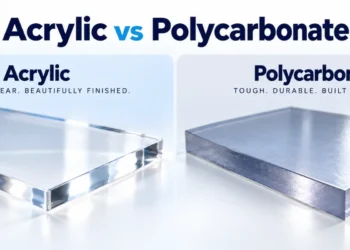
Acrylic vs polycarbonate: What\’s the difference?
Both materials have their place outdoors. The difference comes down to what matters most for your project.
| Consideration | Acrylic | Polycarbonate |
|---|---|---|
| UV resistance | Naturally good UV resistance | Choose an appropriate UV-protected grade |
| Impact resistance | Rigid; standard grades can crack | Very high impact resistance |
| Clarity | Excellent optical clarity | Good clarity, depending on grade |
| Light transmission | Over 92% for clear 3 mm Perspex cast acrylic | 84–87% for clear Lexan Exell-D |
| Scratch resistance | Generally better than standard polycarbonate | Scratches more easily; anti-scratch grades available |
| Temperature | Perspex guide lists -40°C to 80°C | Check the technical data for the selected grade |
| Common applications | Windows, signs and displays | Guards, covers and suitable roofing applications |
The figures above are manufacturer-specific examples, not universal values for every acrylic or polycarbonate product.
Still unsure which material is right? Our Acrylic vs Polycarbonate guide covers their differences in more detail.
Why does plastic sheet need room to expand?
This is one of the things we would always consider before installing an outdoor plastic panel. Plastic expands and contracts as the temperature changes. Even a relatively small amount of movement can become important when you\’re working with a larger sheet. To put this into perspective, the Perspex technical guide lists a thermal expansion rate of 0.077 mm per metre for every 1°C change in temperature.
Across a 50°C temperature change, that\’s approximately:
- 4 mm of movement over 1 metre.
- 9 mm of movement over a 2.44 metre length.
That\’s enough movement to cause problems if the sheet is held too tightly.
When installing plastic sheet outdoors:
- Allow enough clearance around the panel.
- Make sure fixing holes and fasteners allow for movement.
- Avoid overtightening screws.
- Follow the manufacturer\’s installation instructions for the specific sheet and fixing system.
- Check that sealants, tapes and other installation products are compatible with the material.
For example, Laserlite roofing instructions recommend oversized fixing holes of approximately 11–12 mm for its roofing system, with fixings centred in the holes. This is a product-specific recommendation, not a hole size to apply to every plastic panel. The same principle applies to acrylic: allow the sheet to move rather than forcing it into a rigid installation. The exact clearance and fixing method will depend on the sheet dimensions and the way it is supported.
Which plastic sheet should you choose for your outdoor project?
It depends on where the sheet will be used and what it needs to do. Here are some common applications and where we would start.
| Application | What to consider | Material to investigate |
|---|---|---|
| Boat windows | Clarity, UV exposure, impact and shape | Acrylic or polycarbonate, depending on the window |
| Caravan windows | Original specification, clarity and impact | Often acrylic, subject to the original design |
| Custom skylights | Clarity, light transmission and shape | Acrylic, including clear or opal options |
| Outdoor guards and covers | Impact resistance and safety requirements | UV-protected polycarbonate |
| Outdoor signs and displays | Appearance, clarity and UV resistance | Acrylic |
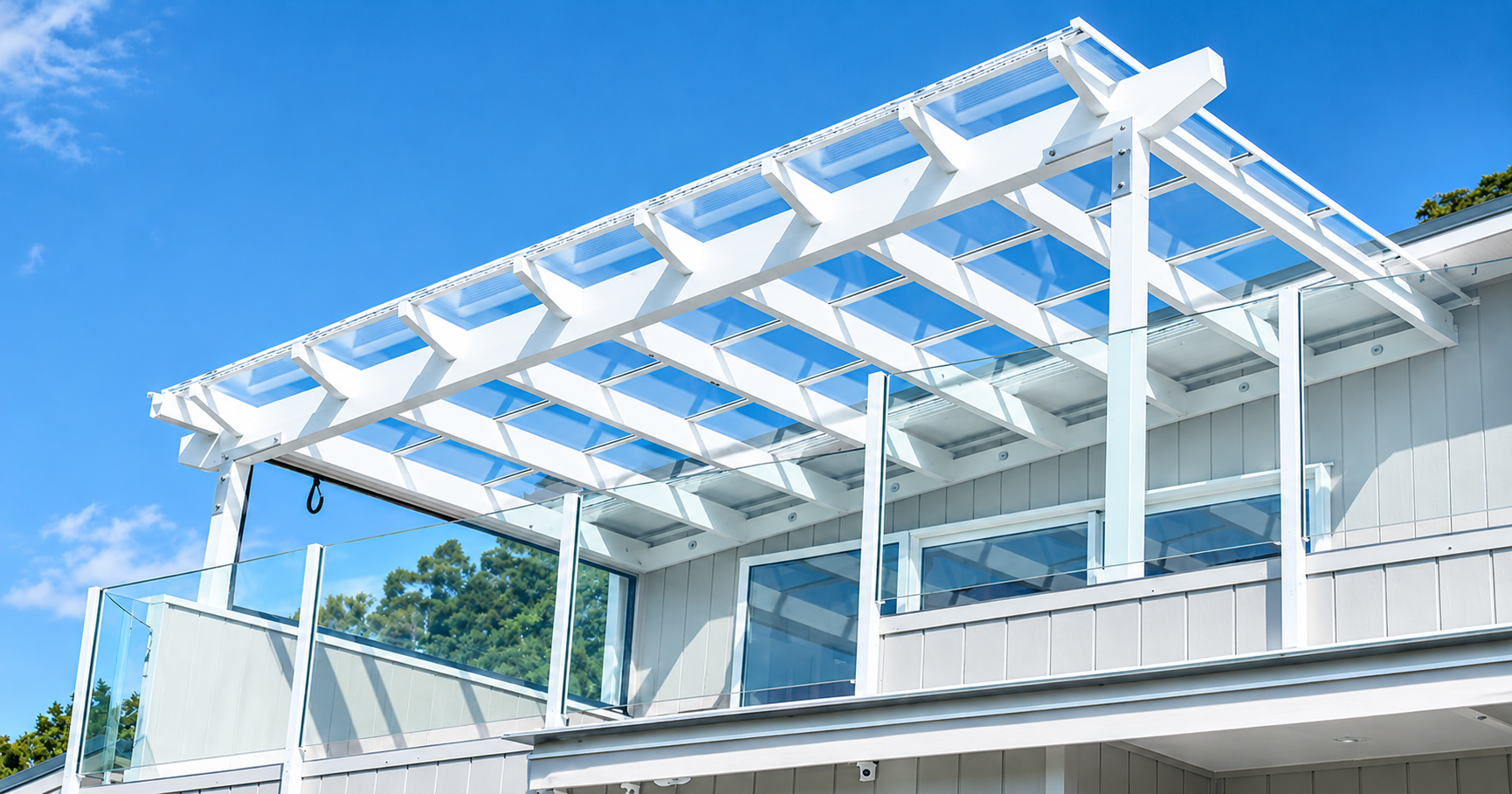
| Patio and carport panels | UV protection, impact, support and installation | Suitable roofing-grade polycarbonate |
| Greenhouse panels | Light transmission, UV exposure and installation | Material designed for greenhouse use |
These are starting points rather than final specifications. Thickness, sheet size, support spacing, fixing methods and the environment can all affect the final choice. For example, a replacement boat window may need to follow the shape and thickness of the original rather than simply using the material with the highest impact resistance. Similarly, a skylight needs to suit its existing frame, measurements and intended use. If the panel is part of a building, roof or safety-critical installation, check the relevant engineering requirements and New Zealand Building Code provisions before selecting a material.
How do you look after plastic sheet outdoors?
A little regular maintenance helps keep outdoor plastic looking its best. For general cleaning, use warm water, mild detergent and a soft cloth. Rinse the surface afterwards to remove any remaining dirt or cleaning solution.
A few things to avoid:
- Abrasive cloths and scouring pads.
- Strong solvents such as acetone.
- Cleaning products that haven\’t been checked for material compatibility.
- Dry wiping when the surface has grit or dust on it.
If the sheet is near the coast, rinse away salt and accumulated dirt regularly. Also keep an eye on the fixings and surrounding frame, as corrosion or movement in the supporting structure can affect the installation.
When in doubt, check the material manufacturer\’s cleaning and maintenance recommendations. Acrylic and polycarbonate can have different chemical compatibility requirements, so don\’t assume a cleaning product suitable for one will automatically be suitable for the other.
Need help choosing the right plastic sheet?
There isn\’t one plastic sheet that suits every outdoor job. If clarity and appearance are your main priorities, acrylic is a good place to start. If impact resistance is more important, look at UV-protected polycarbonate. The important part is matching the material to the actual application, rather than choosing based on appearance alone.
At Cambrian Plastics, we\’ve been working with plastic sheet, cutting and custom fabrication in Henderson for decades. Whether you\’re looking for sheet material, a replacement window or a custom-made component, we can help you work through the options.
If you\’re unsure what to use, send us a few details about your project:
- What you\’re making or replacing.
- The approximate width and height.
- The required thickness, if known.
- Whether the sheet will be exposed to direct sunlight.
- Any photographs, drawings or an existing part you can use as a reference.
We\’ll help you identify the material options worth considering. Get in touch with Cambrian Plastics to discuss your project or request a quote. For retails or point of sales you could check on here.